Protect critical enterprise data from ransomware, insider threats, and accidental deletion with a security-first backup architecture built on immutable storage, air-gapped recovery principles, and verified restore mechanisms.
Ravqon delivers ransomware protection services and immutable backup solutions designed to ensure your data remains unalterable, recoverable, and compliant even under active cyberattacks.


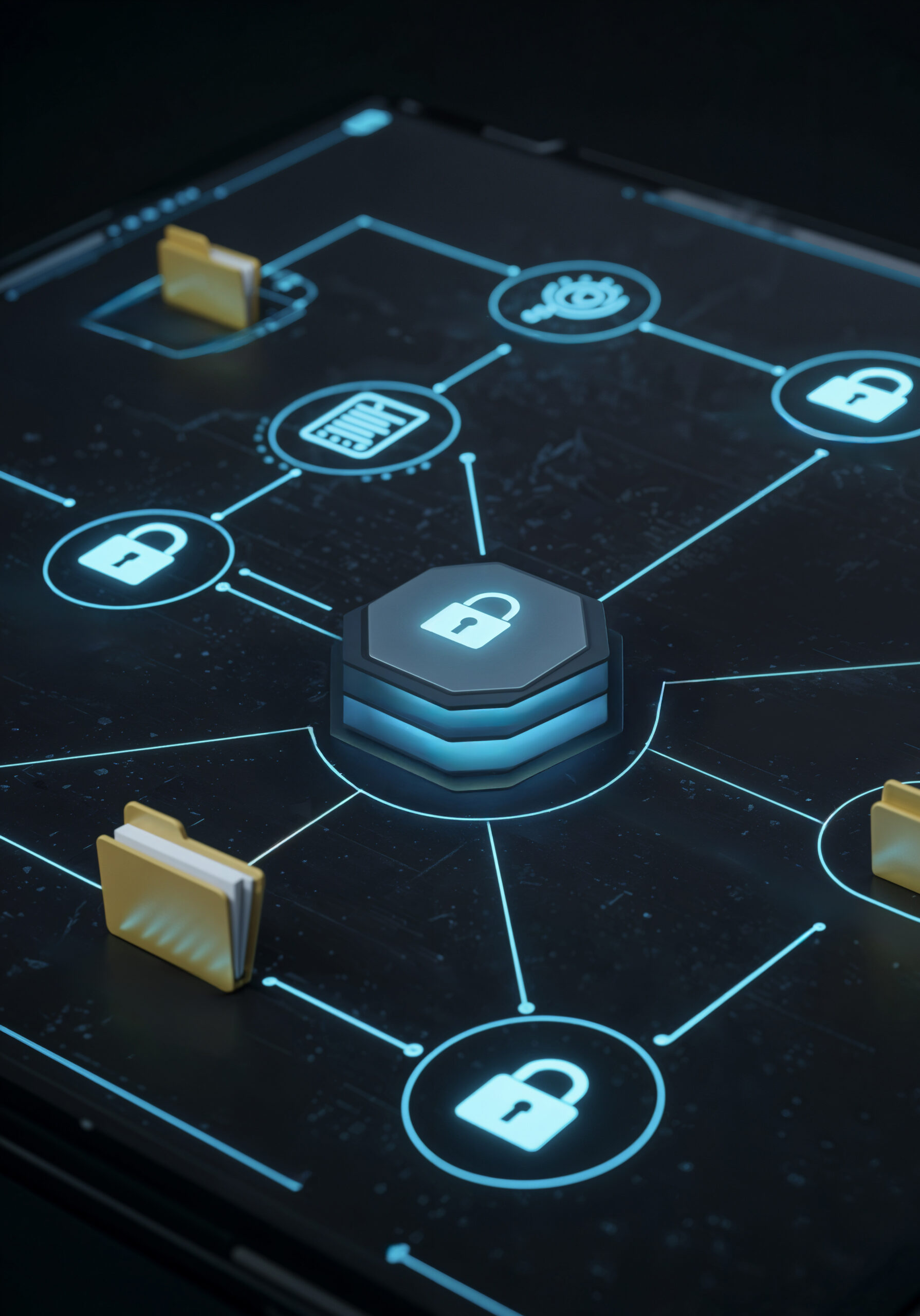
Immutable backup is a write-once-read-many (WORM) data protection model where backup data cannot be changed or deleted for a defined retention period.
It is implemented using object lock storage, WORM policies, air-gapped vaults, and hardened backup repositories.
How Immutable Backup Prevents Ransomware Damage
Once data is stored in an immutable layer, it cannot be encrypted, altered, or deleted—even if systems are compromised.
This ensures backups remain recoverable even during full-scale ransomware attacks or admin credential breaches.
Role in Ransomware Defense Strategy
Immutable backup acts as the survivability layer in a layered security model:
Deployment Models
Immutable backup can be implemented across different environments:
Ransomware protection is no longer limited to antivirus or endpoint security. In enterprise IT environments, ransomware resilience depends on whether backup systems themselves can survive an attack.
Traditional backups fail in ransomware scenarios because:
Modern ransomware groups specifically target:
Without immutable backup architecture, organizations face total data loss even if backups exist.
A valid enterprise data protection strategy must ensure:
Ravqon’s ransomware protection approach ensures data integrity, secure recovery, and business continuity through immutable storage and tested recovery workflows.
With continuous restore validation and orchestrated recovery processes, organizations can reduce downtime risk, prevent data tampering, and achieve predictable recovery aligned with defined RTO and compliance needs.

Immutable, object-locked storage removes the possibility of backup encryption or deletion, regardless of which credentials an attacker compromises.

Orchestrated, dependency-aware restore runbooks reduce recovery time from days to hours against defined RTO targets.

Predictable, tested recovery paths limit operational and revenue impact compared to ad-hoc, reactive recovery attempts.

Tamper-evident retention controls provide auditable evidence of data integrity for regulatory and sector-specific obligations.

A validated, immutable recovery architecture removes ransom payment as the only path back to operational continuity.

Scheduled restore validation closes the gap between "we have backups" and "we know our backups work.
Ravqon delivers engineering-led resilience strategies designed to ensure enterprise systems remain recoverable, secure, and continuously validated against modern cyber threats such as ransomware, credential attacks, and infrastructure failures.
Backup and recovery architecture is designed around your real dependency map and RPO/RTO needs, not generic templates. Each workload is aligned with business-critical recovery priorities.
Recovery runbooks are built on tested, repeatable frameworks refined across enterprise environments. They are continuously improved through real recovery exercises.
Immutability, segmentation, and isolation are built into the design, not added later. This protects backups even during ransomware or credential attacks.
Recovery readiness is tested on a defined schedule, ensuring resilience is verified. Results are tracked to strengthen weak points in recovery.
Ransomware recovery is a structured engineering process, not a manual restore task. Ravqon delivers orchestrated recovery services to restore systems safely and efficiently. Recovery Orchestration Process
A controlled step-by-step recovery approach ensures clean and reliable restoration:
RPO and RTO Alignment Strategy –
Recovery is designed around business-defined objectives:
Ravqon aligns recovery design with these targets to ensure predictable continuity outcomes.
Restore Testing and Validation –
Recovery is considered valid only after verification.
We perform scheduled restore tests, recovery drills, and dependency validation to ensure real-world readiness.
It is a strategy that ensures backups remain secure, isolated, and recoverable even when production systems are compromised by ransomware attacks.
Immutable backups use WORM-based storage policies that prevent modification or deletion of data for a defined retention period.
Yes, if backups are online and writable. This is why immutable or air-gapped storage is required.
Backup stores data copies, while disaster recovery focuses on restoring complete business operations after disruption.
Recovery time depends on RTO design, but structured recovery orchestration significantly reduces downtime compared to manual restores.
Many compliance frameworks recommend or require tamper-proof retention mechanisms for critical data protection.
Object Lock is a storage feature that enforces immutability at the object level for a defined retention period.
No, during the lock period, even administrators cannot modify or delete immutable backup data.
Through scheduled restore testing, recovery drills, and application-level integrity validation.
Yes. If cloud backups are not configured with immutability, least-privilege access, and isolation, ransomware can encrypt or delete backup data through compromised credentials or API access.
It is a strategy that ensures backups remain secure, isolated, and recoverable even when production systems are compromised by ransomware attacks.
Immutable backups use WORM-based storage policies that prevent modification or deletion of data for a defined retention period.
Yes, if backups are online and writable. This is why immutable or air-gapped storage is required.
Backup stores data copies, while disaster recovery focuses on restoring complete business operations after disruption.
Recovery time depends on RTO design, but structured recovery orchestration significantly reduces downtime compared to manual restores.
Many compliance frameworks recommend or require tamper-proof retention mechanisms for critical data protection.
Object Lock is a storage feature that enforces immutability at the object level for a defined retention period.
No, during the lock period, even administrators cannot modify or delete immutable backup data.
Through scheduled restore testing, recovery drills, and application-level integrity validation.
Yes. If cloud backups are not configured with immutability, least-privilege access, and isolation, ransomware can encrypt or delete backup data through compromised credentials or API access.
Get a structured assessment of your current backup security posture and recovery readiness.


Ravqon helps enterprises modernize with Cloud, AI, Data, Cybersecurity and Digital Engineering solutions.
© 2026 Ravqon Technologies. All Rights Reserved
© 2026 Ravqon Technologies. All Rights Reserved
Privacy Policy | Terms & Conditions